


Anyone who's dieted to the bitter end knows that insidious excess weight has a nasty tendency to come back—typically, just under 13 percent of people who manage to lose weight gain it back within a year.
Why do people gain weight after losing weight?
The main reason for the return of lost kilograms is that those who lose weight do not think that they need to continuously reduce the calorie content of their diet.Many people simply look forward to the last day of their diet and start eating right away, then the 4-5 pounds they lost will soon come back.The fact is that any diet allows you to lose some weight at the initial stage, because the calories consumed are reduced.
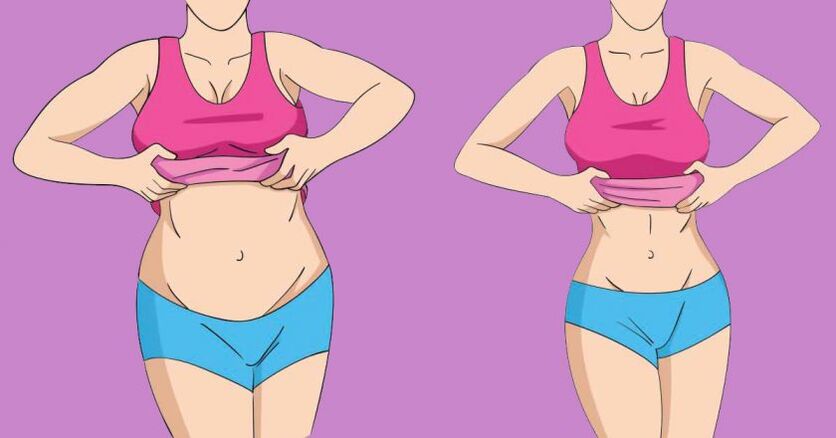
But this happens due to the loss of water and glycogen, which are easily restored later.This phenomenon is called rebound weight gain, which means that more weight is gained than lost.When losing weight quickly, a person's appetite increases as the body's stress response to dietary restrictions.
Restricted, single-component, unbalanced diets create real stress on the body, both physiologically and psychologically, because for many people who are prone to obesity, food is a favorite way to avoid problems, and diets deprive them of this opportunity.
Any diet creates a connection between the body's hormonal levels, neurotransmitters and the subtle structures of the brain.Thus, the fear of gaining weight due to the extra portion, abstaining from favorite foods, ignoring the natural "hunger - feeding - satisfaction" cycle, causes a person to stop understanding when he is full, changes the perception of food, that is, the opposite effect occurs: food deprivation in the form of a craving for food.
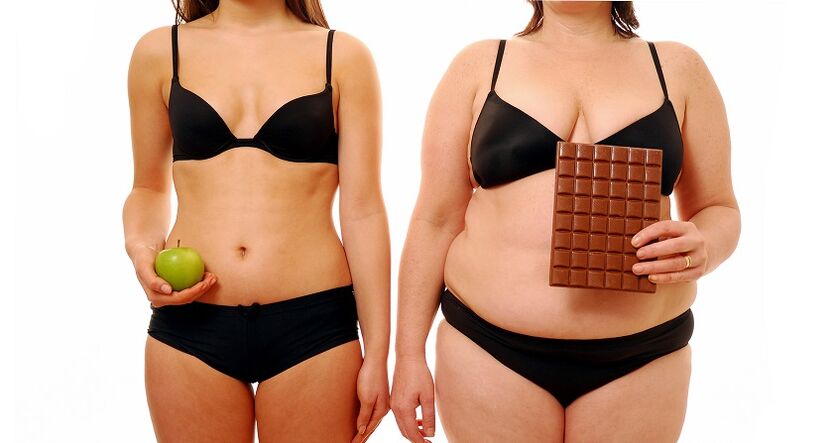
Many of those who try to lose weight through diets and fasting find that the last of the planned pounds do not go away with practically no effort.This is the so-called "stopping point" - the result of slowing down the metabolism in order to burn calories more efficiently.The roots of the problem go back to our caveman past, when due to constant food shortages, people who stored fat only during periods of good nutrition could survive the years of famine.Since then, our genetic memory perceives food restriction as a signal to spend fat "reserves" more sparingly.Only 10 percent of lucky people manage to keep the weight off after dieting.For the rest, a longer course of weight loss than "weekly programs" is needed to achieve lasting results.
It is important!Doctors testify that repeated cycles of weight loss and weight gain negatively affect the state of the cardiovascular system, cause stroke, diabetes, gall bladder and kidney stones, gout and immune disorders, which means that no matter how hard a nutritionist tries, a diet cannot be considered a completely reliable and safe way to lose weight and not lose weight.
How to lose weight and not gain it back
So, the main question for any person prone to obesity is: how to lose weight for a long time without putting back extra pounds on the stomach, waist or hips.According to doctors, the most important way to prevent a return to the previous weight (even with an increase) is not to be tempted by express diets that promise to lose 5-7 kilograms per week.
You should pay attention to the choice of healthy foods (proper nutrition system - proper nutrition), give preference to home-made food rather than store and semi-finished products, and gradually reduce the number of calories in your diet.At the initial stage, it is recommended to consume your usual food, but in reduced portions.

For additional psychological stimulation to maintain the lost weight, weigh yourself periodically and record the results.Nutritionists consider this method more effective than keeping "food diaries" and counting calories.Psychological support from the environment is very important, because there is more to the active weight loss phase than trying to maintain thinness and lightness.
Since any diet slows down the overall metabolism, coming off of it is a very important period that will determine the behavior of eating more and the probability of not gaining weight after losing weight.At this stage, normal metabolism is restored, so now it is easiest to prepare a new eating style and consolidate the weight gained.

For those who decide to follow this advice, nutritionists and psychologists have prepared the following recommendations:
- fall in love with your newfound thinness as a permanent part of your new life, stop thinking of yourself as fat and awkward;
- monitor what goes into your mouth and avoid excesses (sometimes something "tasty but harmful" is allowed);
- use a simple "plate division rule" that allows the body to gently adapt to a smaller and more balanced diet, when half of the plate is filled with plant foods, the remaining two parts are filled with carbohydrates and proteins, respectively, you are allowed to eat everything;
- make each meal a small holiday without worrying about hurrying, reading a book or watching TV - such conditions will imperceptibly bring the moment of satiety closer;
- it is advisable to gradually give up canned and frozen foods, as well as fried foods, cooking, steaming or grilling;
- The ideal part for those who are interested in how to lose weight so as not to return later, the side dish should fit in the palm of your hand;
- alcohol consumption should be minimized;sobriety is not necessary, but it should be remembered that strong drinks greatly increase the appetite;
- It is better not to go to the store, as well as to the restaurant/cafe hungry, in order not to buy more or give in to food temptations.
Additional information.It is undesirable to consume exotic vegetables and fruits (food in general) in large quantities - they can disrupt normal metabolism.
Acquiring new life habits
Changing your life habits is hard work on your own, but the result is worth it, it is not only about the lost ability to lose weight, but also about the overall improvement of the quality of life.
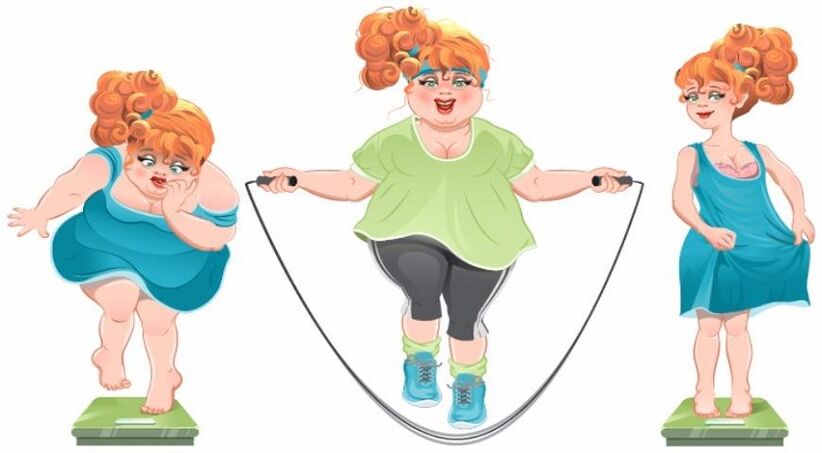
Almost the most important condition for staying at any weight for a long time is physical activity.This component of weight loss is often forgotten.However, this new lifestyle habit is extremely important to promote leanness and new nutrient metabolism.It does not have to be a gym or a sports section, the main thing is regularity and enough (up to 5 hours a week) physical activity: brisk walking, running, cycling, rollerblading, swimming.
Pay attention!After starting regular training, you can gain 0.5-1 kg of weight, this is not fat, but increased muscle.The healthy habit of leading an active lifestyle will be strengthened by gradually abandoning minibuses, going for walks, neglecting the elevator, replacing coffee breaks with drinking water.
Another great habit that will last a lifetime with due diligence is reducing portion sizes and switching to healthy foods, rather than going back to a "pre-diet" diet.
Periodic consumption of vitamins should also become a habit, because when there is a lack of vitamins in the body, the metabolism is disturbed.
A properly selected diet will help you lose extra pounds, but there is always a question: how to maintain weight after losing weight, how to stay slim and stop gaining weight.It is necessary to develop a reasonable long-term optimal nutritional plan that will promote health and longevity.